
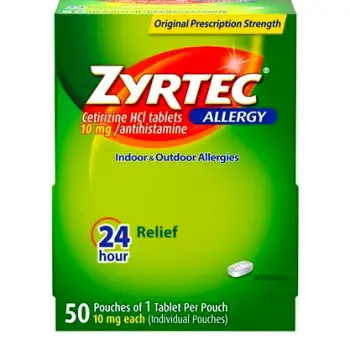
 h2>The short answer for regular Tylenol and Zyrtec
In the United States, regular single-ingredient Tylenol contains acetaminophen, while regular Zyrtec contains cetirizine. An interaction report identifies no interaction between these two ingredients, so they generally can be taken together when each medicine is otherwise appropriate for the person.
A special waiting interval is not required between single-ingredient acetaminophen and cetirizine. They may be taken at the same time or at separate times according to the directions on each product's Drug Facts label.
This answer applies only to the specific ingredients, not automatically to every product carrying the Tylenol or Zyrtec brand name. Tylenol is a family of products, and some versions contain additional pain relievers, antihistamines, cough medicines, decongestants, or other ingredients. Check the active-ingredient section before combining products.
The lack of an identified interaction does not guarantee that the combination is suitable for every individual. Extra caution may be needed with liver or kidney disease, pregnancy or breastfeeding, other medicines, sedatives, or products with multiple active ingredients. A pharmacist can check the exact products and the person's medication list.
Taking both medicines is useful only when there is a separate reason for each one-for example, allergy symptoms together with a headache. Acetaminophen does not treat allergies, and cetirizine does not reduce pain or fever.
What each medicine treats
Acetaminophen, the active ingredient in regular Tylenol, is used to reduce pain and fever. It may be relevant when someone has a headache or another type of pain, or when fever is present.
Cetirizine, the active ingredient in regular Zyrtec, is an antihistamine used for allergy symptoms such as sneezing, a runny nose, itchy or watery eyes, and itching of the nose or throat. It targets allergy symptoms rather than pain or fever.
Because the medicines have different purposes, using both does not mean that one improves the effect of the other. For example, a person with seasonal allergy symptoms and a separate headache may have a reason to use an antihistamine and a pain reliever. Someone with allergy symptoms alone may not need acetaminophen, while someone with pain alone may not need cetirizine.
The appropriate choice depends on the symptoms and the exact product. If symptoms do not fit the usual uses of these medicines, are severe, or keep returning, a healthcare professional can help determine whether self-treatment is appropriate.
Timing and safer use
Single-ingredient acetaminophen and cetirizine do not require a special separation interval. When both are otherwise appropriate, they may be taken together or at different times while following each product's labeled directions.
Do not use the absence of a direct interaction as a reason to exceed the labeled amount or frequency. Read the Drug Facts label for each product, and follow its directions for the intended age group. The appropriate directions depend on the exact formulation and the person using it.
The most important product-safety check is the complete active-ingredient list. Acetaminophen may be included in more than one pain, cold, flu, or multi-symptom medicine. Taking several products that contain it can unintentionally raise the total amount and increase the risk of serious liver damage.
Do not rely on the brand name alone. Compare the active ingredients on every medicine being used, including products taken for symptoms that seem unrelated. If it is unclear whether two products overlap, pause and ask a pharmacist to review them rather than guessing.
Understanding Tylenol and Zyrtec Compatibility
The crucial difference between regular Tylenol and combination products
The active ingredients-not the Tylenol brand name-determine whether a product can be combined with Zyrtec. Some Tylenol-branded products contain acetaminophen plus other medicines. PM, cold, flu, and multi-symptom versions therefore need to be assessed individually.
Tylenol PM is materially different from regular Tylenol. It contains acetaminophen plus diphenhydramine, an antihistamine. Zyrtec contains cetirizine, which is also an antihistamine. Taking Tylenol PM with Zyrtec therefore combines two antihistamines rather than combining plain acetaminophen with cetirizine.
That combination may increase dizziness, drowsiness, difficulty concentrating, and impaired judgment or coordination. These effects can make activities such as driving or operating machinery unsafe. Alcohol, sedatives, or tranquilizers may add to drowsiness associated with cetirizine.
Other Tylenol combination products may contain different additional ingredients and must be checked ingredient by ingredient. Do not assume that a product is compatible with Zyrtec simply because 'Tylenol' appears on the package. If the label lists more than one active ingredient, a pharmacist can help assess the combination.
Side effects and situations requiring extra caution
The main risks from these medicines are not identical. Acetaminophen carries a serious liver-damage warning if more than the labeled amount is taken, if it is combined with other acetaminophen-containing medicines, or if it is used by someone who consumes three or more alcoholic drinks daily. The risk relates to acetaminophen exposure, not to a direct interaction with cetirizine.
Cetirizine may cause drowsiness. The label advises caution with driving or operating machinery and warns that alcohol, sedatives, and tranquilizers may increase drowsiness. Adding another antihistamine, as in Tylenol PM, can further increase impairment.
Ask a doctor or pharmacist before use if you have liver or kidney disease, are pregnant or breastfeeding, or take other medicines. Professional advice is also important when the product contains multiple active ingredients or when it is unclear whether another medicine already contains acetaminophen.
Children require product-specific attention. Pediatric acetaminophen and cetirizine products can have different directions based on the product, formulation, age, and sometimes weight. Do not apply adult directions to a child. For liquid medicines, use the measuring device supplied with the product, and ask a pediatric professional when the child's age, weight, product, or directions are uncertain.
When to contact a healthcare professional or seek urgent help
Ask a pharmacist or clinician to review the medicines before use when either product has multiple active ingredients, when other medicines or sedatives are involved, or when there is liver or kidney disease, pregnancy, or breastfeeding. A review is also appropriate for a young child or whenever the label directions are unclear.
A suspected acetaminophen overdose requires immediate medical help or contact with Poison Control, even if the person feels well and has no symptoms. Do not wait for symptoms to appear. Have the product packages available if possible so the ingredients and amount taken can be identified.
Seek urgent help for trouble breathing or swelling that could indicate a severe allergic reaction. Urgent medical assessment is also warranted for concerning symptoms after acetaminophen use that could signal serious liver injury, particularly when an overdose or use of more than one acetaminophen-containing product may have occurred.
If the concern is drowsiness or impaired coordination after combining cetirizine with another antihistamine or sedating medicine, do not drive or operate machinery. Contact a healthcare professional or poison service for guidance, especially if the person is difficult to wake, has trouble breathing, or may have taken more medicine than directed.