
 h2>The difference at a glance
Claritin contains loratadine, a second-generation antihistamine approved for the temporary relief of allergy symptoms including runny nose, sneezing, itchy or watery eyes, and itching of the nose or throat. Claritin-D combines loratadine with pseudoephedrine sulfate. The “D” in the product name signifies the addition of the decongestant component rather than a higher dose of the antihistamine itself. This addition expands the product's scope to address nasal and sinus congestion, a symptom not directly targeted by loratadine alone.
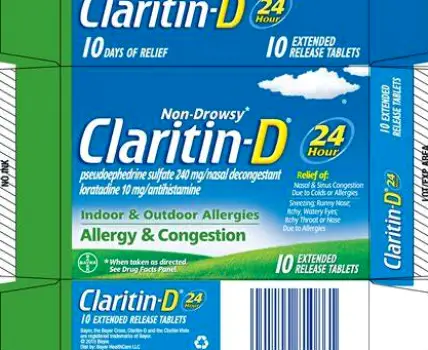
The US OTC market offers two distinct extended-release versions of Claritin-D, each with specific ingredient strengths and dosing schedules for adults and children aged 12 and older. Claritin-D 12 Hour tablets contain 5 mg of loratadine and 120 mg of pseudoephedrine sulfate, directed to be taken once every 12 hours, with a maximum of two tablets in 24 hours. Claritin-D 24 Hour tablets contain higher doses, providing 10 mg of loratadine and 240 mg of pseudoephedrine sulfate, directed to be taken once daily, with a strict limit of one tablet in 24 hours. Children under 12 years of age should not use either extended-release Claritin-D formulation.
Plain Claritin and Claritin-D serve different needs based on symptom presentation. Adding a decongestant introduces a distinct mechanism of action and a corresponding risk profile, including potential cardiovascular effects and interactions that do not apply to plain loratadine. Neither product is universally superior; the choice depends on whether congestion is present and whether the additional risks of pseudoephedrine are acceptable for the individual.
| Feature | Claritin (Plain) | Claritin-D 12 Hour | Claritin-D 24 Hour |
|---|---|---|---|
| Active Ingredients | Loratadine | Loratadine + Pseudoephedrine Sulfate | Loratadine + Pseudoephedrine Sulfate |
| Loratadine Strength | 10 mg | 5 mg | 10 mg |
| Pseudoephedrine Strength | None | 120 mg | 240 mg |
| Dosing Frequency | Once daily | Every 12 hours | Once daily |
| Target Symptoms | Sneezing, itching, runny nose | Same + nasal/sinus congestion | Same + nasal/sinus congestion |
| Age Limitation | See specific label | 12 years and older | 12 years and older |
How loratadine and pseudoephedrine work
Loratadine functions as a second-generation antihistamine by blocking peripheral histamine H1 receptors. Histamine is a chemical released by the immune system during an allergic reaction, and its binding to these receptors triggers symptoms such as sneezing, watery eyes, and itching. By preventing histamine from attaching to these receptors, loratadine reduces the intensity of these specific allergic responses. It does not cure allergies, remove allergens from the environment, or block the underlying immune cascade; it primarily mitigates the symptomatic output of that cascade.
Pseudoephedrine operates through a completely different mechanism. As a decongestant, it acts as a vasoconstrictor, causing the blood vessels in the nasal passages and sinus tissues to narrow. This reduction in blood flow decreases swelling and fluid accumulation in the nasal membranes, thereby opening up airways and relieving the feeling of stuffiness or pressure. While this provides relief from congestion, the vasoconstrictive effect is not limited to the nose. Pseudoephedrine can affect blood vessels and nerve signals throughout the body, which is why it carries additional systemic risks compared to antihistamines.

The combination of these two ingredients allows for broader symptom coverage, but it does not amplify the effect of either component individually. Loratadine does not work harder or faster when paired with pseudoephedrine; it continues to block histamine as it does in plain Claritin. The combination adds a separate therapeutic layer for congestion, which introduces potential side effects unrelated to the antihistamine action. Understanding these distinct mechanisms is essential for recognizing that the added benefit of congestion relief comes with a distinct trade-off in safety and tolerability.
Which symptoms each product targets
Plain Claritin is designed to address symptoms driven primarily by histamine release. This includes runny nose, sneezing, itchy or watery eyes, and itching of the nose or throat. For individuals whose allergic reactions are confined to these histamine-mediated responses, plain Claritin provides targeted relief without introducing additional pharmacological agents.

Claritin-D extends this coverage by adding temporary relief for nasal and sinus congestion. Congestion results from swollen nasal tissues rather than direct histamine effects on mucus production or sensation. While loratadine handles the itching and sneezing, pseudoephedrine is necessary to reduce the physical swelling causing blockage. Adding pseudoephedrine does not make the loratadine component more potent; it simply adds a new action to manage a different type of symptom.

The presence of congestion should be the primary factor in considering Claritin-D. If congestion is absent or mild, the additional risks associated with pseudoephedrine-such as potential increases in heart rate or blood pressure, nervousness, or sleep disturbances-are unnecessary. For individuals experiencing significant nasal blockage alongside other allergy symptoms, the decongestant component of Claritin-D offers relief that plain loratadine cannot provide. The decision to use a decongestant must weigh this added benefit against the possibility of side effects and contraindications, rather than assuming that congestion automatically requires a multi-ingredient approach.
Claritin vs. Claritin-D: Key Differences
Claritin-D 12 Hour versus 24 Hour
The two extended-release formulations of Claritin-D differ in strength and dosing frequency to accommodate different schedules and symptom durations. Claritin-D 12 Hour contains 5 mg of loratadine and 120 mg of pseudoephedrine sulfate. This formulation is labeled for use by adults and children 12 years and older to be taken once every 12 hours. The total daily intake must not exceed two tablets in a 24-hour period. This schedule may be preferred by those who prefer smaller, more frequent doses or who want to manage symptoms around specific times of day.
Claritin-D 24 Hour contains 10 mg of loratadine and 240 mg of pseudoephedrine sulfate. This higher-strength formulation is labeled for use by adults and children 12 years and older to be taken once daily. Only one tablet may be taken in a 24-hour period. This option is designed for continuous symptom control with a single daily dose.
Both formulations are extended-release tablets designed to release the medication slowly over time. To maintain this controlled release profile, the tablets must be swallowed whole. Dividing, crushing, chewing, or dissolving either tablet can cause the medication to be absorbed too rapidly, potentially leading to an overdose or increased side effects. While plain Claritin also has specific dosing instructions, the extended-release nature of Claritin-D requires strict adherence to swallowing the tablet intact, regardless of whether the 12-hour or 24-hour version is chosen. These labeled doses apply to adults and children aged 12 and older; pediatric dosing for plain Claritin may vary by formulation and age, and Claritin-D is not recommended for children under 12.
Side effects and safety differences
Loratadine is generally well-tolerated, but it is not free from side effects. Common reported effects include headache, tiredness, sleepiness, and dry mouth. Although loratadine is a second-generation antihistamine known for lower sedation potential compared to first-generation options, it can still cause drowsiness in some individuals. The labeling warns that taking more than the directed dose may increase the risk of drowsiness.
Claritin-D introduces side effects associated with pseudoephedrine. The most common additional effects include nervousness, dizziness, and sleeplessness. Because pseudoephedrine is a stimulant-like vasoconstrictor, it can also affect the cardiovascular system. Rapid heartbeat is a recognized signal that may require stopping use and consulting a doctor. The presence of these additional side effects means that Claritin-D carries a higher burden of potential adverse reactions than plain loratadine.
Safety profiles diverge further in terms of contraindications. Plain loratadine labeling directs people with liver or kidney disease, or those who are pregnant or breastfeeding, to ask a doctor before use. Claritin-D labeling is more extensive due to the decongestant component. It identifies several conditions where use is prohibited unless directed by a doctor, including narrow-angle glaucoma, urinary retention, severe high blood pressure, severe coronary artery disease, and hyperthyroidism. Claritin-D labeling identifies nervousness, dizziness, or sleeplessness as specific reasons to stop use and ask a doctor, highlighting the nervous system and cardiovascular impacts that are not typical concerns for plain loratadine.
Interactions and situations requiring professional advice
A critical distinction between the two products involves the monoamine oxidase inhibitor (MAOI) restriction. Claritin-D labeling explicitly prohibits use in people taking MAOIs or within 14 days after stopping such medication. This is a strict contraindication related to the pseudoephedrine component, which can interact dangerously with MAOIs to cause severe spikes in blood pressure. This restriction does not apply to plain loratadine, highlighting that the safety considerations for Claritin-D are distinct from and more complex than those for plain Claritin.
Both products require medical consultation under certain health conditions, but the scope differs. For plain Claritin, individuals with liver or kidney disease, or those who are pregnant or breastfeeding, should consult a health professional before use. Claritin-D expands this list significantly. Consumers should ask a doctor before using Claritin-D if they have heart disease, high blood pressure, thyroid disease, diabetes, trouble urinating due to an enlarged prostate, kidney disease, liver disease, or breathing problems such as emphysema or chronic bronchitis. The pseudoephedrine component can exacerbate these conditions, particularly cardiovascular and urinary issues.
Pregnancy and breastfeeding present another area requiring professional guidance. Neither product label declares the medication categorically safe or unsafe in these populations. Both labels direct pregnant or breastfeeding consumers to ask a health professional before use. This cautious approach reflects the need to evaluate individual risk versus benefit, rather than providing a blanket recommendation. Claritin-D extended-release tablets must be swallowed whole and not crushed or chewed, and consumers with kidney or liver disease may need different doses as directed by a doctor, reinforcing the need for professional oversight when using the combination product.
How to choose between Claritin and Claritin-D
The choice between plain Claritin and Claritin-D should be driven by the specific symptom pattern experienced. If symptoms are limited to sneezing, itchy or watery eyes, runny nose, or itching of the nose or throat, plain Claritin is often sufficient. These are histamine-mediated symptoms that loratadine targets directly without the need for additional components.
Claritin-D becomes relevant when nasal or sinus congestion is a significant part of the symptom pattern. If congestion is bothersome and not relieved by antihistamines alone, the decongestant component in Claritin-D can provide temporary relief by reducing nasal swelling. This added benefit comes with additional risks. Pseudoephedrine can cause nervousness, sleeplessness, dizziness, and rapid heartbeat, and it is contraindicated in several cardiovascular and urinary conditions. Congestion alone does not automatically justify the use of Claritin-D if the individual has underlying health issues that make pseudoephedrine unsafe.
When deciding between the two, consult the specific Drug Facts label for the formulation you are considering. Follow the exact dosing instructions and do not exceed the recommended limits. If you have health conditions such as high blood pressure, heart disease, thyroid issues, diabetes, urinary problems, or respiratory conditions, or if you are pregnant or breastfeeding, seek advice from a pharmacist or clinician before using Claritin-D. The presence of multiple symptoms, other medications, or uncertainty about the best approach should also prompt professional consultation. Avoid using Claritin-D for routine long-term management without medical guidance, and do not combine it with other products containing decongestants or antihistamines without verifying safety.