
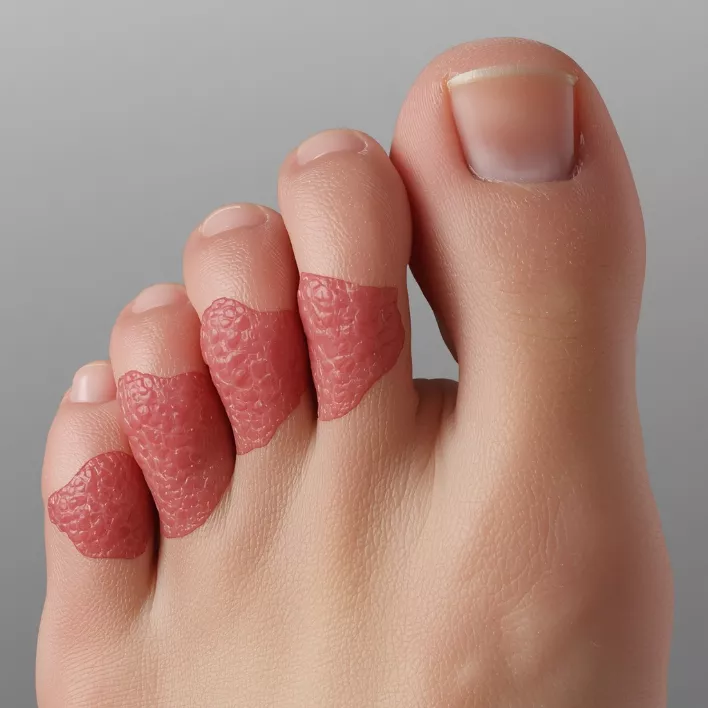
 h2>Confirm That It May Be Athlete's Foot
Athlete's foot, medically known as tinea pedis, is a common fungal infection of the skin on the feet. It is a specific form of ringworm that typically manifests as an itchy, peeling, scaly, or red rash. While it can appear anywhere on the foot, it most frequently develops in the warm, moist environment between the toes.
Because other skin conditions can produce similar symptoms-such as eczema, contact dermatitis, or psoriasis-visual identification alone is not always conclusive. If the rash does not fit the typical pattern, if it spreads rapidly, or if you notice changes in your toenails (such as thickening or discoloration), it is important to have a healthcare provider examine the area. In these cases, a provider may take a skin scraping or nail sample to confirm whether fungus is present before starting treatment. Attempting to treat an undiagnosed rash can sometimes mask symptoms or worsen the underlying condition.
Start With a Proven Antifungal Treatment
For uncomplicated athlete's foot affecting the skin of the feet, the standard first-line approach involves using nonprescription (over-the-counter) topical antifungal medications. These products are widely available in pharmacies and are specifically formulated to target the fungi that cause ringworm infections.
There is no single “best” brand; rather, effectiveness depends on using a product with an active ingredient proven to treat fungal skin infections. Common active ingredients listed by health authorities include clotrimazole, miconazole, terbinafine, and ketoconazole. These are available in various formulations such as creams, sprays, gels, or powders.
Different antifungal agents often have different usage schedules depending on the specific product, its concentration, and the location of the infection on the foot. For example, one US label for terbinafine hydrochloride 1% cream directs users to apply it twice daily for one week between the toes, but for two weeks on the bottom or sides of the foot. Another common option, clotrimazole 1% cream, typically involves applying a thin layer twice daily. These schedules are specific to those particular products and formulations; they should not be assumed to be interchangeable with other brands or active ingredients. Always choose a product labeled specifically for “athlete's foot” or “tinea pedis.”
Athlete's Foot Knowledge Check
Apply Treatment Correctly and Know What to Expect
Correct application is critical for successfully clearing the infection. Start by washing the affected area with soap and water, then dry it thoroughly, especially between the toes. Fungi thrive in moisture, so ensuring the skin is completely dry before applying medication helps the treatment work more effectively.

Apply the cream, spray, or powder exactly as directed on the product label. A common misconception is that athlete's foot can be cured instantly. No credible medical evidence supports an “instant cure”; antifungal medications require time to eliminate the fungus from the skin. The required duration depends entirely on the active ingredient and the specific product you are using.

Continue applying the treatment for the full duration stated in the package instructions, even if the itching and redness disappear after a few days. Stopping early can allow surviving fungi to repopulate, leading to a return of the infection. For instance, while terbinafine may be directed for use over one to two weeks depending on the site, other agents like clotrimazole may require up to four weeks. If symptoms have not improved within four weeks of using a nonprescription antifungal as directed, consult a healthcare provider. Check the label for age restrictions; some products are not recommended for children under a certain age without medical advice.
Keep Feet, Socks, and Shoes Dry During Treatment
Moisture control is a key component of both treatment and prevention. Hygiene habits that help keep feet clean and dry support the antifungal medication's work and reduce the conditions that allow fungus to grow.
Change your socks daily, or more frequently if your feet sweat heavily. Choose socks made from breathable materials that wick moisture away from the skin. When selecting footwear, opt for shoes that allow air circulation. If you wear damp shoes or socks during the day, consider rotating your footwear to let each pair dry out completely between uses.
While keeping feet dry is essential, it does not replace the need for antifungal medication. Hygiene measures alone are rarely sufficient to clear an existing active infection. Maintaining dry conditions helps prevent the fungus from spreading to other parts of your body or recurring after treatment ends. Avoid tight, non-breathable shoes that trap heat and moisture whenever possible.
Avoid Unproven Remedies and Common Treatment Mistakes
Several common treatment errors can delay recovery or worsen athlete's foot. The most significant mistake is relying on unproven home remedies as a substitute for established antifungal treatment. Claims that substances like hydrogen peroxide, rubbing alcohol, essential oils, garlic, salt soaks, or vapor rubs can kill athlete's foot instantly are not supported by evidence. These methods may irritate the skin or alter its appearance without addressing the underlying fungal infection.
Another frequent error is stopping treatment prematurely because symptoms seem to have resolved. Symptom relief does not equal eradication. Do not mix usage schedules from different products. The instructions for terbinafine are not interchangeable with those for clotrimazole; using one product's schedule with another can lead to under-treatment or unnecessary exposure.
Be cautious with over-the-counter corticosteroid creams. Using a steroid cream on an undiagnosed rash that might be athlete's foot can worsen the infection, facilitate its spread, and change its appearance, making it harder for a provider to diagnose later. Steroids should only be used if specifically prescribed by a clinician alongside antifungal treatment. Never use a corticosteroid alone to treat suspected athlete's foot.
Prevent Athlete's Foot From Spreading or Returning
Once the infection is cleared, maintaining good foot hygiene helps prevent athlete's foot from spreading to other areas of your body or recurring. Prevention habits should continue even after you finish your medication course.
Key preventive measures include changing socks daily and wearing ventilated footwear. When in public showers, locker rooms, or pool areas, wear sandals or shower shoes to avoid contact with contaminated surfaces. Do not share personal items such as towels, socks, shoes, or nail clippers with others, as fungi can be transmitted through shared objects.
While these habits significantly reduce the risk of recurrence and spread, they do not guarantee that every case will be prevented. Fungal spores are resilient and common in many environments. Consistent hygiene complements treatment but does not substitute for it if an active infection is present. Be aware that untreated or poorly managed athlete's foot can occasionally spread to the nails (fungal nail infection), hands, or groin, though this is not inevitable. Prompt and complete treatment of the initial skin infection helps minimize these risks.

Know When to Get Medical Care
While most mild cases of athlete's foot can be managed with nonprescription treatments, certain circumstances require professional medical assessment. You should contact a healthcare provider if:
- The rash is severe, widespread, or unusually painful.
- Symptoms do not improve after two to four weeks of consistent use of an over-the-counter antifungal as directed.
- The infection appears to be spreading to other areas of the body, such as the groin or hands.
- You notice signs of a secondary bacterial infection, such as increased redness, warmth, swelling, pus, or pain in the foot or lower leg.
- You have diabetes or a weakened immune system; these conditions can increase the risk of complications and require careful management.
If you suspect a fungal nail infection-indicated by thickened, discolored, or crumbly toenails-consult a healthcare provider. Nail infections typically do not respond to the same topical creams used for skin athlete's foot and may require specialized testing and prescription treatment. Never attempt to diagnose or treat nail fungus with over-the-counter skin creams without professional guidance.