
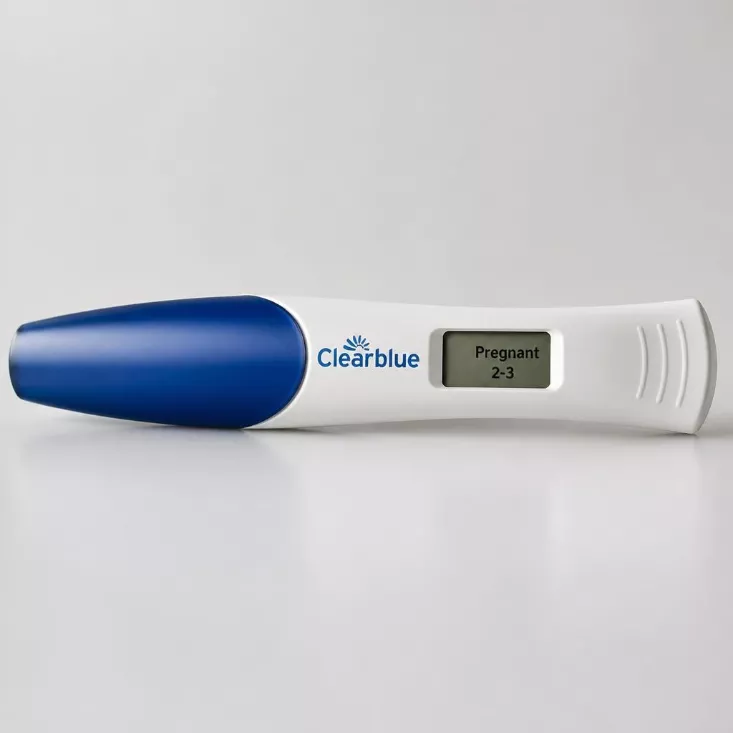
 h2>What a Clearblue 2-3 result means at 6 weeks
A Clearblue Digital Pregnancy Test with Weeks Indicator provides an estimate of time since conception based on urinary human chorionic gonadotropin (hCG) levels. The device displays a category of 1-2, 2-3, or 3+ weeks. This numeric display is distinct from the positive or negative pregnancy result itself.

Distinguish this estimate from the gestational age used by clinicians. Medical professionals typically date pregnancy from the first day of the last menstrual period, a method known as gestational age. The manufacturer's guidance indicates that the test's 2-3 weeks-since-conception display corresponds to approximately 4-5 weeks pregnant under this clinical dating convention. A 3+ display generally corresponds to more than 5 weeks pregnant.
Seeing a 2-3 display at six weeks of expected gestation may seem contradictory. The result is not a literal claim that you are only two or three weeks past conception. It is an estimate derived from hormone concentration in the urine at the time of testing. A single test category cannot diagnose a problem, nor does it confirm that the pregnancy is healthy.
Why the two week counts may not match
The discrepancy between your calculated weeks and the test display often stems from the difference between clinical dating and the biological timing of conception. Clinicians calculate weeks from the first day of the last menstrual period, which assumes a regular cycle and ovulation approximately two weeks after that start date. Conception, implantation, and the subsequent rise in hCG follow a different biological timeline that can vary between individuals.
Urine concentration also plays a significant role in how the test interprets hCG levels. The manufacturer advises using the first urine of the day for the most accurate estimate. Drinking large quantities of fluid before testing can dilute the urine, potentially affecting the hormone concentration detected by the sensor. If the urine is more dilute than expected, the test might display a lower week estimate than would be shown with a concentrated sample.
The timing of ovulation and implantation can vary. If conception occurred later in the cycle than average, the biological age of the pregnancy may indeed be closer to the 2-3 weeks-since-conception estimate, even if the menstrual-based calculation suggests six weeks. Standard variations in hCG production do not follow a single universal path. The test provides a range based on population data, not a precise measurement of your specific pregnancy's age.
Can this result show whether the pregnancy is progressing?
The weeks indicator on a home pregnancy test is an estimate and cannot by itself establish whether a pregnancy is progressing normally. It does not diagnose viability, miscarriage, or the location of the pregnancy. While a positive result confirms the presence of hCG, the specific week category displayed offers limited information about the health of the pregnancy.
Anecdotal reports online often present conflicting outcomes for similar test displays. Some individuals with a 2-3 display later have healthy pregnancies, while others may experience pregnancy loss. A 3+ display does not guarantee a normal outcome. These individual stories are not predictive evidence. The test sensor measures a hormone that rises in many early pregnancies, but the rate of rise and the absolute concentration can vary widely without indicating a specific clinical trajectory.
Interpreting the result as a definitive verdict on viability is inaccurate. A failure to reach a 3+ display does not prove miscarriage, and reaching 3+ does not prove that everything is normal. The device is designed to estimate time since conception, not to monitor pregnancy health. Relying on this single metric to assess progression can create unnecessary anxiety without providing reliable clinical insight.
Understanding Your Clearblue Weeks Indicator Result
What to do instead of repeatedly testing
Repeatedly using home pregnancy tests to check for changes in the week display is unlikely to resolve uncertainty or provide reliable information about pregnancy health. The test provides a snapshot of urine hCG concentration at a single moment. Variations in hydration, timing of the day, and natural fluctuations in hormone production can cause the displayed estimate to change, stay the same, or fluctuate unpredictably.
Following the product instructions is essential for obtaining the most consistent estimate possible from a home test. This includes using first-morning urine and avoiding excessive fluid intake before testing. Even when used correctly, the test is not a diagnostic tool for monitoring early pregnancy.
If the displayed estimate conflicts with your expected dating or is causing significant concern, the appropriate step is to contact a pregnancy-care professional. Healthcare providers can offer clinical assessment and context that a home test cannot. Acknowledging anxiety is reasonable, but repeated testing does not replace professional guidance and may increase stress without adding value.
When to contact a healthcare professional urgently
While a mismatch between test estimates and expected dates is often a matter of timing or urine concentration, certain symptoms require prompt or emergency medical attention. Distinguish general concern from signs of serious complications.
Symptoms that warrant contacting a maternity care professional or seeking urgent care include vaginal bleeding, cramping, or pain in the lower abdomen. Heavy bleeding, severe pain, faintness, or loss of consciousness are particularly serious and require immediate help.
Ectopic pregnancy is a serious condition that requires urgent treatment. Symptoms can include one-sided lower abdominal pain, vaginal bleeding or brown watery discharge, shoulder-tip pain, and discomfort when urinating or defecating. Dizziness or fainting may also occur. Sudden intense abdominal pain accompanied by dizziness, fainting, nausea, or marked pallor is a medical emergency. These symptoms should not be monitored through additional home tests. If any of these warning signs appear, seek emergency care immediately.
What a clinician may use to assess the pregnancy
When a patient presents with early pregnancy concerns or ambiguous test results, a healthcare professional typically conducts a clinical assessment based on symptoms, medical history, and physical examination. Ultrasound imaging is a primary tool for evaluating early pregnancy. Transvaginal ultrasound can help identify the pregnancy's location and assess viability. If the initial scan does not provide a clear answer, a repeat scan may be scheduled after an appropriate interval to allow for further development.
In some situations, serum hCG measurements may be used to guide management. HCG levels alone are not sufficient to determine the location of a pregnancy. In cases of unknown pregnancy location, guidelines advise against using hCG measurements alone to diagnose the site of implantation. Symptoms and clinical review remain critical components of the assessment.

Scan visibility depends on gestational age and developmental stage. Expecting specific findings at a precise day is not clinically accurate. While hCG trends can provide information, they do not follow a universal doubling rule for every pregnancy. Clinical evaluation integrates multiple factors to provide a comprehensive understanding of the pregnancy's status, rather than relying on a single test or number.