
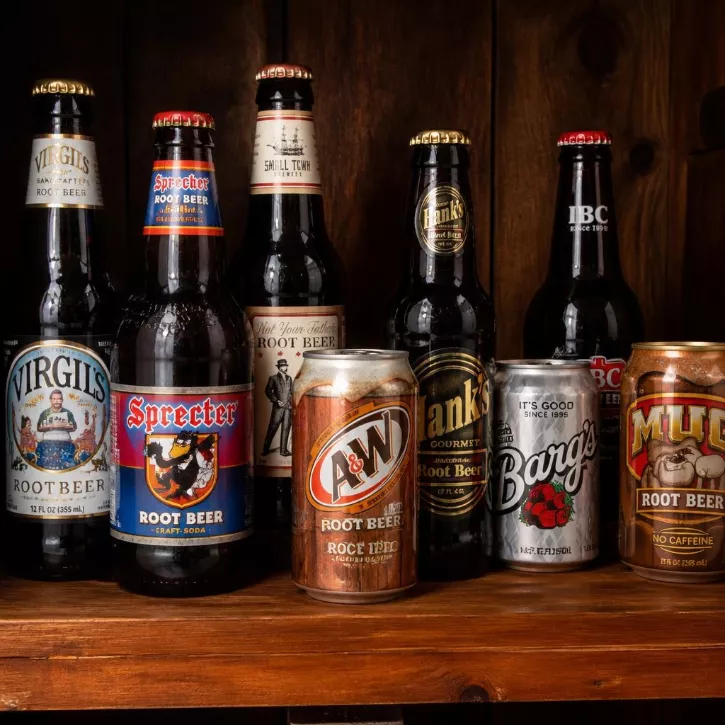
 h2>Quick answer: Does root beer have caffeine?
Most mainstream root beer sold in the United States is formulated without caffeine, but consumers cannot assume that every bottle or can of root beer is automatically caffeine-free. While the absence of caffeine is a common formulation pattern for many popular brands, it is not a guaranteed feature of the entire category. Root beer recipes vary significantly by manufacturer, and the inclusion of caffeine depends on specific brand choices rather than traditional ingredients.
A blanket assumption that all root beer contains no caffeine can lead to unexpected intake for those monitoring their consumption. The caffeine content is determined product-by-product, meaning one brand may be entirely free of the stimulant while another includes it as a standard ingredient. To know for certain whether a specific beverage contains caffeine, you must look at the formulation of that particular product rather than relying on general category characteristics.
Does A&W root beer have caffeine?
A&W Root Beer and Diet A&W Root Beer sold in the United States are both caffeine-free. According to their official product labels, caffeine is not listed as an ingredient in either the regular or the diet version. For consumers choosing between these options based on caffeine content, both variants provide a safe choice under current U.S. labeling standards.
Product formulations can change over time, and regional variations may exist. The information that A&W products are caffeine-free applies to the standard U.S. market products as indicated on their labels. If you encounter an older package, a limited-edition variant, or a product from a different region, it is always prudent to verify the current ingredient list. Relying on the most recent product label ensures accuracy, especially if a recipe has been updated or if you are purchasing from a source outside the standard U.S. distribution network.
Which other popular root beers are caffeine-free?
Beyond A&W, several other well-known root beer brands in the U.S. market are also typically caffeine-free. These include Mug Root Beer, Diet Mug Root Beer, Dad's Root Beer, and Diet Dad's Root Beer. According to their current product labels and manufacturer information, none of these standard varieties list caffeine as an ingredient.
View this list as a snapshot of current U.S. formulations rather than a permanent guarantee for all future products or every package size. Manufacturers may adjust recipes, introduce new variants, or sell different formulations in different markets. While Mug and Dad's root beers are currently caffeine-free, the most reliable method remains checking the specific package you intend to consume. If you are strictly avoiding caffeine, always confirm the status of your chosen brand by reviewing its ingredient statement at the time of purchase.

Caffeine in Root Beer: Quick Check
Why regular Barq's is the main exception
Regular Barq's Root Beer stands out as the primary mainstream exception among popular U.S. root beers because it contains caffeine. According to The Coca-Cola Company's product information, a standard 12 fl oz serving of regular Barq's contains 22 mg of caffeine. Caffeine is an added ingredient in this specific formulation, distinguishing it from the majority of its competitors in the aisle.

A key point of confusion for many consumers involves the difference between regular and diet versions of the same brand. While regular Barq's includes caffeine, Diet Barq's Root Beer sold in the United States is caffeine-free. This demonstrates that regular and diet formulations of a single brand do not necessarily share the same caffeine status. Assuming that the diet version matches the regular version regarding caffeine content could lead to unexpected intake if the regular variant is consumed instead. Always verify whether you are purchasing the regular or diet product when managing caffeine intake.
How to check any root beer label
To accurately determine if a specific root beer contains caffeine, begin by examining the ingredient list on the package. Under U.S. food labeling regulations, ingredients must be declared by their common or usual name. If caffeine has been added to the beverage, it should appear explicitly in this list. This simple step allows you to identify the presence of caffeine quickly for most commercially packaged products.

Reading the ingredient list only tells you if caffeine is present; it does not necessarily tell you how much. The U.S. Nutrition Facts panel does not require manufacturers to list the exact milligram amount of added caffeine. While some brands may choose to provide this information voluntarily on their packaging, many do not. If you need to know the precise quantity of caffeine in a serving-for example, if you are tracking daily intake limits-you should consult the manufacturer's product information online rather than relying solely on the printed package label. These labeling standards apply specifically to U.S. packaged foods and may differ in other countries.
How root beer compares with coffee, cola, and tea
Understanding where root beer fits within the broader landscape of caffeinated beverages helps put its caffeine content into perspective. The U.S. Food and Drug Administration lists representative caffeine contents for common drinks: about 80-100 mg per 8 oz cup of coffee, 30-40 mg per 12 oz serving of cola, and approximately 30-50 mg per 8 oz serving of common brewed teas. Exact amounts in these beverages vary widely by product, brand, and preparation method.
Regular Barq's Root Beer contains 22 mg of caffeine per 12 fl oz serving. This amount is notably lower than a typical cup of coffee and generally less than a standard 12 oz cola. Unlike most root beers which contain zero caffeine, regular Barq's is not entirely free of the stimulant. For those who prefer the taste of root beer but wish to avoid caffeine entirely, choosing a brand that lists no caffeine in its ingredients ensures they consume no amount, whereas opting for regular Barq's means consuming a small but measurable quantity compared to coffee or tea.
Practical takeaways if you are limiting caffeine
If you are actively limiting your caffeine intake, follow a simple decision framework when choosing root beer. First, check the specific product rather than assuming all root beers are the same. Second, distinguish carefully between regular and diet formulations of the same brand, as they may have different caffeine statuses. Regular Barq's contains caffeine, while Diet Barq's does not; similarly, always verify current labels because formulations can change.
“Caffeine-free” refers only to the stimulant content. It does not imply that the beverage is sugar-free, low-calorie, or nutritionally beneficial. Root beer remains a sugary soft drink regardless of its caffeine status. If you have a medically established limit for caffeine consumption, rely on product-specific information to ensure your chosen beverage fits within those personal parameters, rather than making assumptions based on the beverage category alone.