
 h2>Copper at a glance: what it does and who needs it
Copper is an essential trace mineral that the body uses in small amounts but cannot function without. It acts as a cofactor for enzymes involved in energy production, iron metabolism, connective-tissue formation, nervous system signaling, and immune defense. It also supports the body's natural defenses against oxidative damage.
Because these processes touch so many systems, copper deserves steady attention in the diet, but this doesn't mean chasing a single “best” food. Most people eating a varied diet that includes some combination of seafood, meat, whole grains, nuts, seeds, or legumes take in enough copper without special planning.
Copper shows up in a wide range of foods, from shellfish and organ meats to mushrooms, seeds, and dark chocolate. Some sources are extremely concentrated, providing well beyond a day's worth of copper in a single small serving, while others contribute smaller but still meaningful amounts as part of a balanced plate.
Focuses on identifying those food sources, comparing realistic serving sizes, and putting the numbers in context. Deficiency and excess intake are real but uncommon concerns, covered in later sections, but for most readers the practical question is simpler: which everyday foods provide copper, and how can they fit into ordinary meals without over-relying on any one item.
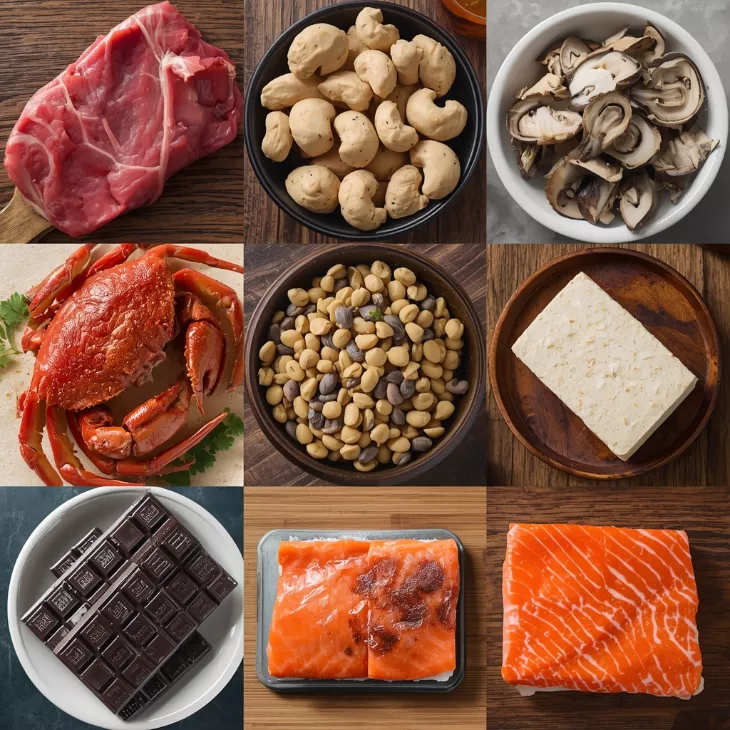
Highest-copper foods by serving
The table below shows representative copper content for foods often cited as top sources, based on USDA and NIH reference data. Actual values shift depending on the specific cut, species, brand, and cooking method, so treat these as useful benchmarks rather than fixed numbers.
| Food | Serving | Copper (mcg) |

|—|—|—|
| Beef liver | 3 oz | 12,400 |
| Eastern oysters, cooked | 3 oz | 4,850 |
| Shiitake mushrooms | 1/2 cup | 650 |
| Cashews, dry-roasted | 1 oz | 629 |
| Dungeness crab | 3 oz | 624 |
| Sunflower seeds, toasted | 1/4 cup | 615 |
| Dark chocolate, 70-85% cacao | 1 oz | 501 |
| Firm tofu | 1/2 cup | 476 |
| Chickpeas | 1/2 cup | 289 |
| Wild Atlantic salmon | 3 oz | 273 |
A few patterns stand out. Organ meats and shellfish sit far above everything else on the list, oysters alone providing several times a typical day's worth of copper in a modest portion. Mushrooms, nuts, seeds, and legumes form a solid middle tier that fits more naturally into regular meal rotation. None of these foods needs to appear daily; the list is meant to help you recognize concentrated sources, not to suggest that liver or oysters belong in frequent rotation.
Plant-based copper sources
Copper is not limited to animal foods. Several plant categories provide meaningful amounts, which matters for anyone following a vegetarian or vegan pattern, or simply looking to diversify beyond seafood and organ meats.
Nuts and seeds are among the more concentrated plant sources, with cashews and sunflower seeds standing out, along with other nuts and seeds in smaller amounts. Legumes and soy foods, including chickpeas, other beans, and tofu, contribute copper alongside protein and fiber, making them practical staples for regular meals rather than occasional additions.
Mushrooms, particularly shiitake, are notably rich in copper relative to their calorie content. Whole grains and potatoes supply smaller but steady amounts when eaten regularly, and leafy greens and many fruits contribute modest contributions that add up across a day's meals. Dark chocolate with a high cacao percentage is another plant-derived source worth noting, since even a small serving provides a substantial amount.

Together, these foods show that excluding shellfish and organ meats doesn't mean giving up on copper intake. A diet built around nuts, seeds, legumes, mushrooms, whole grains, and some fruit and vegetables can supply copper reliably, without needing to rely on the most concentrated animal sources. Translates these options into practical meal patterns.
Copper basics: sources and safety
Everyday moderate-copper foods and meal ideas
Turning a nutrient list into actual meals is where copper intake becomes sustainable. Rather than aiming for one high-copper food, think in terms of combinations that show up naturally across a week.
A grain bowl with chickpeas or tofu, sautéed mushrooms, and a scattering of sunflower seeds or cashews brings together several moderate copper sources in one dish. A snack of dark chocolate and a handful of nuts covers a meaningful amount without any planning effort. Whole-grain toast with a nut butter, or a stir-fry that pairs tofu with shiitake mushrooms, works the same way.

Seafood eaters can rotate salmon or crab into weekly meals as a moderate contributor, while still leaving room for plant-based days built around beans, lentils, and whole grains. The point isn't to calculate copper at every meal, but to notice that many familiar dishes already contain reasonable amounts once a few of these ingredients are included regularly.
If you want to check a specific product or homemade dish, food composition databases such as USDA FoodData Central let you look up brand-specific or preparation-specific values, since roasting, boiling, or processing can shift the copper content of the same base ingredient. This is more useful for fine-tuning than memorizing an exhaustive list, since variety across the week matters more than precision at any single meal.
How much copper you need each day
In the United States, the recommended dietary allowance for adults age 19 and older is 900 mcg of copper per day. Needs increase during pregnancy, to 1,000 mcg per day, and further during lactation, to 1,300 mcg per day. Children's requirements rise gradually with age, and infants have adequate intake levels set separately from the RDA system used for older children and adults.
The FDA's Daily Value used on nutrition labels, 900 mcg for adults and children age 4 and older, aligns with the adult RDA, which makes label percentages a reasonably direct reference point for most adults, though not for pregnant or breastfeeding individuals or younger children.
These figures represent average daily needs over time, not a target to hit at every meal or even every single day. A day with lower copper intake is generally balanced out by other days with foods like legumes, nuts, or seafood, since the body doesn't require precise daily matching. Looking back at the food list, a single serving of a concentrated source such as oysters or liver can exceed the entire day's reference amount, while moderate sources like chickpeas or salmon contribute a smaller fraction that fits more naturally into a varied weekly pattern. Anyone with specific concerns about pregnancy or lactation needs should discuss individualized intake with a healthcare provider rather than relying solely on general reference values.
Copper deficiency: risk factors and symptoms
Copper deficiency is uncommon in people eating a varied diet, largely because the mineral appears in enough different food groups that avoiding all of them would take deliberate effort. Certain situations raise the risk meaningfully.
Conditions that impair nutrient absorption, such as celiac disease, are recognized risk factors, since damage to the intestinal lining can reduce how much copper the body takes in from food. Bariatric surgery, which alters digestive anatomy, is another context associated with increased risk. Prolonged use of high-dose zinc supplements is also a recognized contributor, because zinc and copper compete for absorption in the gut, and sustained excess zinc intake can interfere with the body's copper status over time.
When deficiency does occur, reported effects include anemia, lighter-than-normal skin or hair pigmentation, elevated cholesterol, connective-tissue problems, bone changes consistent with osteoporosis, disrupted lipid metabolism, coordination difficulties, and a higher susceptibility to infection. These are nonspecific signs that overlap with many other conditions, so they aren't a basis for self-diagnosis.
Anyone with a malabsorptive condition, a history of bariatric surgery, or long-term high-dose zinc supplement use who notices unexplained symptoms along these lines should raise the possibility of copper status with a healthcare provider rather than attempting to self-correct through diet or over-the-counter supplements.
Excess copper, supplements, and special precautions
Getting copper from food is a different situation than taking it in supplement form. Whole foods deliver copper alongside other nutrients and in amounts that are naturally limited by portion size, while supplements can deliver a concentrated dose in a single capsule, which changes the risk calculation.
In the United States, the tolerable upper intake level for adults is set at 10,000 mcg, or 10 mg, per day. This figure represents the highest chronic daily intake unlikely to cause harm for most people, not a target or a recommended amount to reach. Intake above this level, typically from supplements or combined high-dose sources rather than food alone, has been associated with gastrointestinal symptoms, and sustained excessive exposure can affect the liver.
Wilson disease is a separate and important consideration. It's a rare inherited disorder that causes copper to accumulate in the body rather than being cleared normally, and it requires individualized medical management, often including a clinician-directed low-copper diet along with medication. This condition is distinct from ordinary dietary copper intake in healthy people and should never be self-managed.
One more practical note involves liver specifically. Beyond its very high copper content, liver is also extremely rich in preformed vitamin A, which is a separate consideration during pregnancy. Anyone pregnant or considering liver as a regular food should follow authoritative pregnancy nutrition guidance on vitamin A intake before making it a frequent choice.
Choosing foods for your needs, including low-copper diets
Most readers fall into one of a few practical categories, and the right approach to copper depends on which one applies.
For a general balanced diet, the goal is simply variety. Rotating through seafood, some meat, legumes, nuts, seeds, mushrooms, and whole grains across the week covers copper needs without any special tracking. For a vegetarian or vegan pattern, leaning on legumes, tofu, mushrooms, nuts, and seeds, as outlined earlier, provides a workable substitute for the animal-based sources at the top of the ranking.
If you suspect a deficiency, particularly with a history of malabsorption, digestive surgery, or extended high-dose zinc supplement use, the appropriate next step is a conversation with a healthcare provider rather than adjusting your diet based on general food lists. Testing and clinical evaluation can identify whether copper status is actually low and guide any correction.
A clinician-directed low-copper diet is a different category entirely, most relevant to Wilson disease or other conditions involving copper accumulation. These diets involve specific food thresholds and restriction lists tailored to the individual's treatment plan and monitoring results. They are not a general wellness strategy, and applying Wilson-disease-style restrictions to a healthy diet isn't supported by evidence and isn't necessary. Anyone managing this condition should rely on guidance from their treating medical team rather than general nutrition articles, since the specifics of what to limit and by how much vary by individual case.
Frequently Asked Questions
What are the best vegetarian sources of copper?
Cashews, sunflower seeds, shiitake mushrooms, tofu, and chickpeas are among the more concentrated plant sources, and whole grains, potatoes, leafy greens, and dark chocolate add smaller but steady contributions across regular meals.
Do most people need a copper supplement?
Copper supplements aren't generally necessary for people eating a varied diet, since food sources across multiple groups typically cover daily needs. Supplement use, dosing, and duration are decisions best made with a healthcare provider rather than independently, especially given how concentrated supplemental doses can be compared with food.
How does zinc affect copper levels?
Zinc and copper share absorption pathways in the gut, and sustained high-dose zinc supplementation is a recognized contributor to copper deficiency over time. This is mainly a concern with prolonged supplemental zinc use rather than zinc from food.
Who should seek professional evaluation for copper concerns?
Anyone with malabsorptive conditions such as celiac disease, a history of bariatric surgery, long-term high-dose zinc supplement use, or symptoms consistent with deficiency should speak with a healthcare provider. Individuals with Wilson disease or concerns about excess copper should rely on individualized guidance from their treating clinician rather than general food lists.