
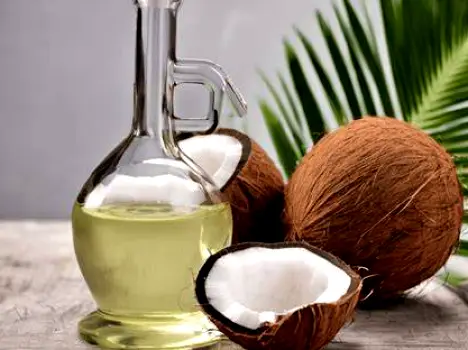
 h2>What fractionated coconut oil is
Fractionated coconut oil is a processed lipid derived from coconut oil, composed primarily of medium-chain triglycerides containing caprylic (C8:0) and capric (C8:0) fatty acids. It is also known by the chemical names caprylic/capric triglyceride or mixed octanoyl/decanoyl triglycerides. While standard coconut oil contains a mix of fatty acids ranging from short to very long chains, fractionated coconut oil isolates and retains the medium-chain fraction, resulting in a product with a distinct physical profile.
Because the longer-chain fatty acids-such as lauric, myristic, and palmitic acids-have been removed, the oil remains liquid at room temperature and does not solidify in cooler environments. This liquid state is a direct result of the chemical structure of its primary components; medium-chain triglycerides do not crystallize as readily as the long-chain fats found in regular coconut oil. The oil is typically clear, colorless, and neutral in both aroma and flavor, distinguishing it from virgin coconut oil, which retains a distinct coconut scent and solid texture below approximately 76°F (24°C).
Distinguish between products sold for different purposes. Fractionated coconut oil can be intended for culinary use, but it is also widely manufactured for cosmetic and carrier-oil applications. A product labeled as fractionated coconut oil or caprylic/capric triglyceride is not automatically interchangeable across these categories. Cosmetic-grade versions are formulated for topical application and may contain processing residues or additives unsuitable for ingestion, while food-grade versions meet specific dietary standards. Consumers must verify the intended use and safety specifications on the specific product label before determining if it is appropriate for their needs.
How fractionated coconut oil is made
The production of fractionated coconut oil involves a chemical process known as fractionation, which separates the various fatty acids found in crude coconut oil based on their physical properties, such as boiling point and solubility. Commercial manufacturing typically begins with refined coconut oil, which is broken down into its constituent fatty acids. These fatty acids are then separated, and the medium-chain fraction-specifically caprylic and capric acids-is isolated.
This isolated fraction is often re-esterified, meaning it is chemically bonded back to glycerin to reform triglycerides. This step creates caprylic/capric triglyceride, which is the stable form of the oil sold to consumers. The specific ratios of C8 to C10 fatty acids, as well as the degree of purification, can vary significantly depending on the manufacturer's specifications and the intended end use of the product. Some products may retain trace amounts of other fatty acids, while others are highly refined to achieve a specific purity profile.
Misinformation often circulates regarding the physical changes these fats undergo during processing. A common error involves confusing melting and boiling points; claims that coconut oil “boils” at approximately 78°F are scientifically incorrect. Melting and boiling are distinct thermodynamic processes. Fractionated coconut oil remains liquid because its component triglycerides have lower melting points than the full-spectrum triglycerides in regular coconut oil. This liquid state persists across a wide range of typical storage and usage temperatures, which is why the product is often described as “liquid coconut oil.” Because manufacturing processes and final specifications vary, the exact thermal and physical properties should be verified against the specific product's technical data sheet or label.
Fractionated coconut oil vs. regular coconut oil and MCT oil
While the terms are often used interchangeably in marketing, fractionated coconut oil, regular coconut oil, and MCT oil represent distinct products with different compositions and uses. Understanding these differences is essential for selecting the right product for culinary or cosmetic purposes.
| Feature | Regular Coconut Oil | Fractionated Coconut Oil (MCT Oil) |
|---|---|---|
| Primary Composition | Mixed triglycerides including lauric acid (C12:0), myristic (C14:0), and palmitic (C16:0) acids. | Predominantly caprylic (C8:0) and capric (C10:0) triglycerides; lauric acid is removed. |
| Physical State | Solid below ~76°F (24°C); liquid above this temperature. | Liquid at room temperature and in cold storage; never solidifies under normal conditions. |
| Aroma/Flavor | Distinct coconut aroma and flavor (especially in virgin forms). | Neutral, odorless, and tasteless. |
| Primary Uses | Culinary cooking, baking, traditional skincare. | Culinary blending, carrier oil for essential oils, cosmetic emollient. |
Fractionated coconut oil is a type of MCT oil, but not all MCT oils are identical. The term “MCT oil” is a broad category that can include triglycerides derived from various sources, including palm kernel oil, not just coconut. Commercial MCT products vary in their fatty acid ratios. Some may be exclusively C8, while others are a mix of C8 and C10. Fractionated coconut oil specifically refers to MCTs derived from coconut and processed to retain the C8 and C10 fractions.
Regular coconut oil, by contrast, retains its full fatty acid profile, including lauric acid, which makes up about 50% of its content. This higher lauric acid content is what gives regular coconut oil its solid texture and solidification point. While both products are fats, their chemical structures dictate different behaviors in cooking, storage, and absorption. Consumers should not assume that a product labeled “MCT oil” is identical to fractionated coconut oil, nor that it is interchangeable with regular coconut oil in recipes or formulations that rely on specific texture or melting properties.
Understanding Fractionated Coconut Oil
Nutrition and metabolism
Edible fractionated coconut oil is a concentrated source of dietary fat. Like all fats, it provides nine calories per gram. Because it is a refined product, it contains no carbohydrates, protein, fiber, vitamins, or minerals. The nutritional profile is strictly limited to its fat content, specifically saturated fat, as medium-chain triglycerides are composed entirely of saturated fatty acids.
In the United States, total fat and saturated fat values must be declared on the Nutrition Facts label. These values are serving- and product-specific. Because manufacturing processes vary, the exact gram amount of fat per serving can differ between brands. It is incorrect to assign universal calorie or gram counts to all fractionated coconut oil products; readers must consult the label of the specific product they intend to use.
Metabolically, medium-chain triglycerides are processed differently than long-chain triglycerides found in typical dietary fats. MCTs are absorbed directly into the portal circulation and transported to the liver, where they are rapidly converted into energy or ketone bodies. Long-chain fats, conversely, require bile salts and lymphatic transport before reaching the liver. This rapid metabolism has led to interest in MCTs for energy production, but it does not automatically confer health advantages over other fats.
Current dietary guidance from the American Heart Association emphasizes choosing sources of unsaturated fats in place of saturated-fat sources and evaluating all fats within the context of an overall heart-healthy dietary pattern. Fractionated coconut oil is a saturated fat and should not be portrayed as a nutritionally necessary replacement for unsaturated plant oils like olive or canola oil. It is one component of a diet, not a substitute for a balanced intake of diverse fats.
Potential benefits and what the evidence actually shows
Research into the health effects of medium-chain triglycerides (MCTs) often focuses on their potential role in weight management and metabolic health, but the evidence requires careful interpretation. A 2015 meta-analysis of 11 randomized trials found that replacing long-chain triglycerides with medium-chain triglycerides was associated with small average reductions in body weight, body fat, and waist circumference. The study authors urged caution in making recommendations, noting that only five of the trials were judged at low risk of bias and the overall evidence quality was low to moderate.
Distinguish between these study conditions and typical consumer use. The observed weight effects concerned the substitution of defined MCTs for longer-chain fats within a controlled caloric framework. This is not the same as adding MCT oil to an existing diet without removing other energy sources. Adding a concentrated fat to a stable caloric intake does not produce weight loss and may contribute to weight gain. The results are small, uncertain, and not guaranteed outcomes of simply using the oil.
Other potential benefits, such as improved cognitive function, enhanced athletic performance, or management of diabetes, remain largely in the realm of research or clinical nutrition. There is insufficient evidence to support claims that fractionated coconut oil treats or prevents these conditions in the general population. While MCT-based ketogenic interventions have been studied for drug-resistant epilepsy, a 2026 systematic review rated the evidence as low to very low certainty and reported that gastrointestinal adverse events were common. These clinical interventions are distinct from casual supplementation and should not be inferred as therapeutic effects for ordinary consumer use.
Culinary, skin, hair, and carrier-oil uses
Fractionated coconut oil's neutral flavor and liquid consistency make it useful in specific culinary and cosmetic contexts. In the kitchen, its lack of aroma makes it suitable for blending into smoothies, coffee, or dressings where a coconut taste is undesirable. Its liquid state allows it to mix easily with other ingredients and remain stable without refrigeration. Because it is a pure fat, it cannot perform the structural roles of butter or solid oils in baking, such as creating flaky textures in pastries.
For topical applications, fractionated coconut oil serves as an effective emollient and carrier oil. In skincare, it helps to soften and smooth the skin without leaving a heavy, greasy residue that can solidify on contact. In hair care, it is used to condition hair and scalp, though it does not possess proven reparative properties for damaged hair shafts. Its primary value in cosmetics is its stability; it resists rancidity better than many unsaturated oils, giving products a longer shelf life.
As a carrier oil, it is commonly used to dilute essential oils for topical application. It does not inherently make essential oils safer or prevent allergic reactions. The safety and efficacy of such mixtures depend on the specific essential oil and the dilution ratio, which varies by substance and purpose.
A critical distinction exists between food-grade and cosmetic-grade products. The U.S. GRAS record for medium-chain triglycerides describes specified food uses, while caprylic/capric triglyceride is also used extensively in cosmetics. A product's name alone does not establish that it is intended for ingestion. Cosmetic formulations may contain preservatives, fragrances, or processing aids that are safe for skin but unsafe for eating. Readers must check the labeled purpose and manufacturer directions before consuming any product.
Safety, product selection, and practical use
Choosing the right fractionated coconut oil product requires attention to labeling and intended use. First, determine whether the product is intended for food, cosmetic, or carrier-oil use. For culinary applications, verify that the product is labeled as food-grade or suitable for ingestion. Cosmetic products should never be ingested unless their labeling expressly identifies them as safe for dietary use.
When selecting a food-grade product, review the Nutrition Facts panel to understand the serving size and total fat content, as these values vary by manufacturer. Check the ingredient list to ensure no unnecessary additives are present. For cosmetic use, examine the ingredient list for potential allergens or irritants, and follow storage directions to maintain product integrity.
Safety considerations include the potential for gastrointestinal discomfort. High concentrations of MCTs have been reported to cause adverse gastrointestinal events in clinical dietary use, particularly when introduced in large amounts. There is no universal safe dose or tolerance threshold for the general population. Individuals should start with small amounts if using it for dietary purposes and monitor for digestive issues.
Avoid using fractionated coconut oil as a therapy for obesity, diabetes, dementia, or epilepsy. Medically supervised ketogenic therapy involves precise ratios and monitoring that are distinct from adding fractionated oil to an ordinary diet. There are no proven disease-treatment claims for casual consumer use. For specific storage, smoke point, or dilution ratios, rely on the instructions provided by the specific product manufacturer rather than general guidelines, as these parameters are product-specific.